


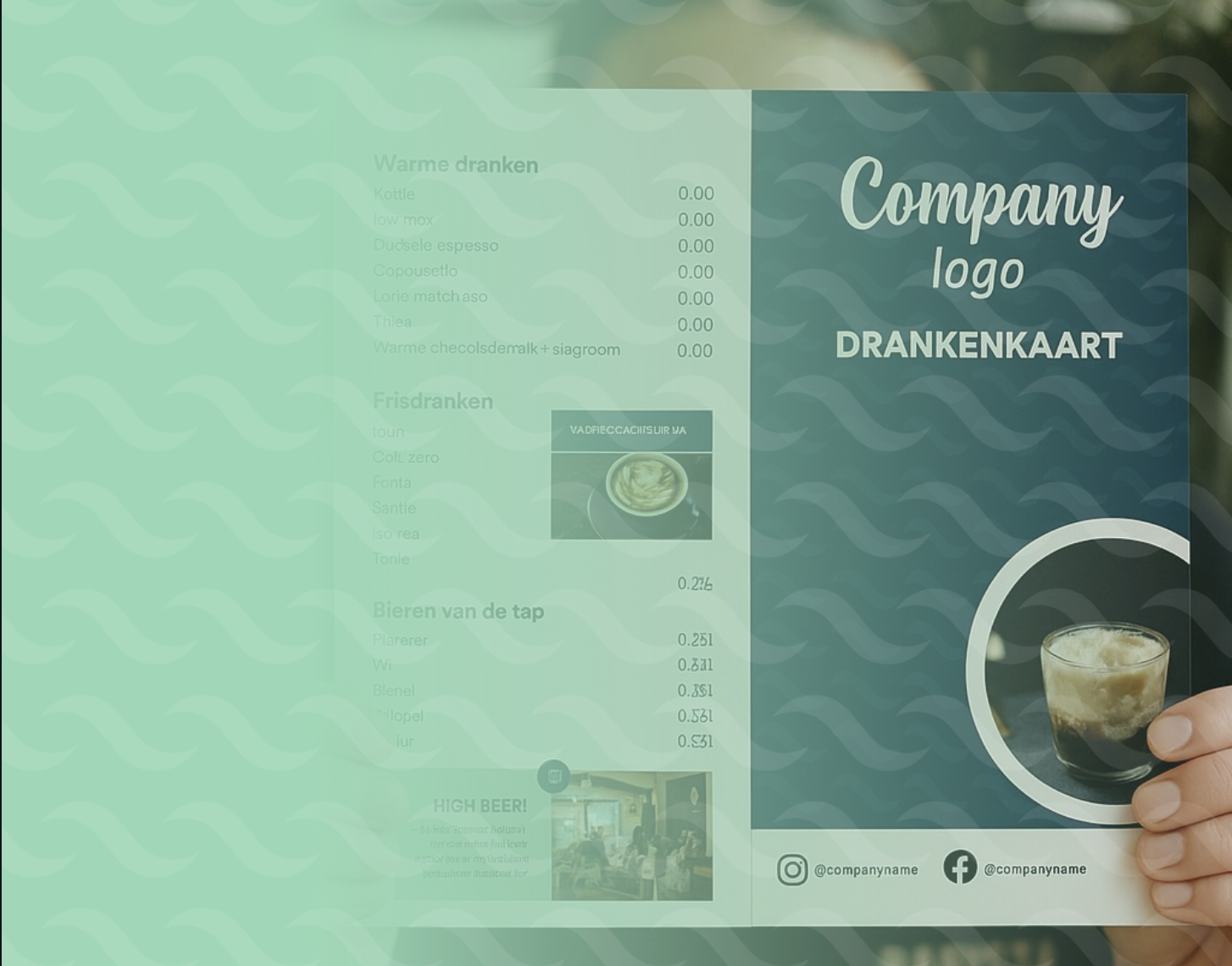
The menu determines which brand wins in the hospitality industry
75% of consumers only decide what they are going to drink once they are in a restaurant or other hospitality establishment. Not on the way there, not at home, but the moment they open the menu. There, in those few seconds of decision-making, the choice between your brand and that of your competitor is made.
For A-brands, the menu presents a direct opportunity to convert the brand into sales. It is the moment when years of brand building, distribution, and activation come together in a single decision, made at the table in a matter of seconds.
Research: menus can generate 30% more revenue
That choice is rarely rational. Various behavioral and neuroscientific studies show that guests make their decisions largely intuitively: visual stimuli and order are more important than price or brand awareness. As a result, the menu is not a neutral overview, but an influencing tool that unconsciously guides behavior.
Smart design exploits this psychology of choice and perception. Applied studies, including research by Cornell University, confirm this in practice: menus that respond to these behavioral principles can generate up to 30% more revenue.
The three principles of effective menus
Not only behavioral research, but also our 15 years of experience in designing and developing menus shows that three principles consistently determine what guests choose.
- Visuals attract attention and increase preference
The brain processes images 60,000 times faster than text. Product visuals activate the reward center even before rational consideration begins. Locations that add strong product images see revenue increases of up to 30%. Especially with premium spirits and specialty beers, this makes the difference between a standard order and an upgrade.
- Less choice, more satisfaction
The ‘choice overload theory’ proves it: too many options are paralyzing. Fewer than seven choices per category actually increase the likelihood of a decision and subsequent satisfaction. In practice, this means: six carefully selected brands are preferable to a long, unreadable list.
- Prices without the euro sign
MRI research shows that currency symbols activate the same area of the brain as physical pain. By omitting the € sign, that subconscious barrier disappears and the price feels less ‘heavy’. The result: greater willingness to upgrade or order a second round.
From design to sales growth
Those who consistently apply these principles see measurable results. Catering establishments report an average of 20% higher turnover of A-brands; with premium positioning, this rises to 35%. By visually distinguishing a particular category and displaying the full range, sales at participating locations are growing by double digits. The menu is no longer seen as an appendix, but as brand activation at the moment of decision.
From static list to smart brand tool
Whereas menus used to take weeks to design, brands and hospitality entrepreneurs can now do this themselves in a matter of minutes. With Menuez’s new AI tool, brands can quickly design professional, brand-consistent menus in their own house style, without a designer or waiting time.
The tool combines speed with behavioral science: automatic layouts, image recognition, and visual templates that respond directly to proven sales principles.
Ready for the moment of decision at the table?
The menu is not a detail, but a strategic sales channel. It is the place where brand preference is converted or lost. Want to know how your brand can get more out of the menu? Contact one of our employees at menuez.tech or send a message to info@menuez.tech for more information.